
[Meticulous Doctor] Tattoo RemovalTattoo Removal - Semi-Permanent Makeup Removal

Tattoo Removal - Semi-Permanent Makeup Removal
This procedure removes existing tattoos and cleans up the skin to match your changed image. We help you clean up the tattoo area to prepare for a new beginning. [VAT Excluded]
Options
Treatment Details



Procedure Process
첫 상담부터 마무리까지의 실제 진행 순서를 확인하세요.
- 01
Establishment and guidance of a customized treatment plan by tattoo type
- 02
Application of anesthetic cream or local anesthesia
- 03
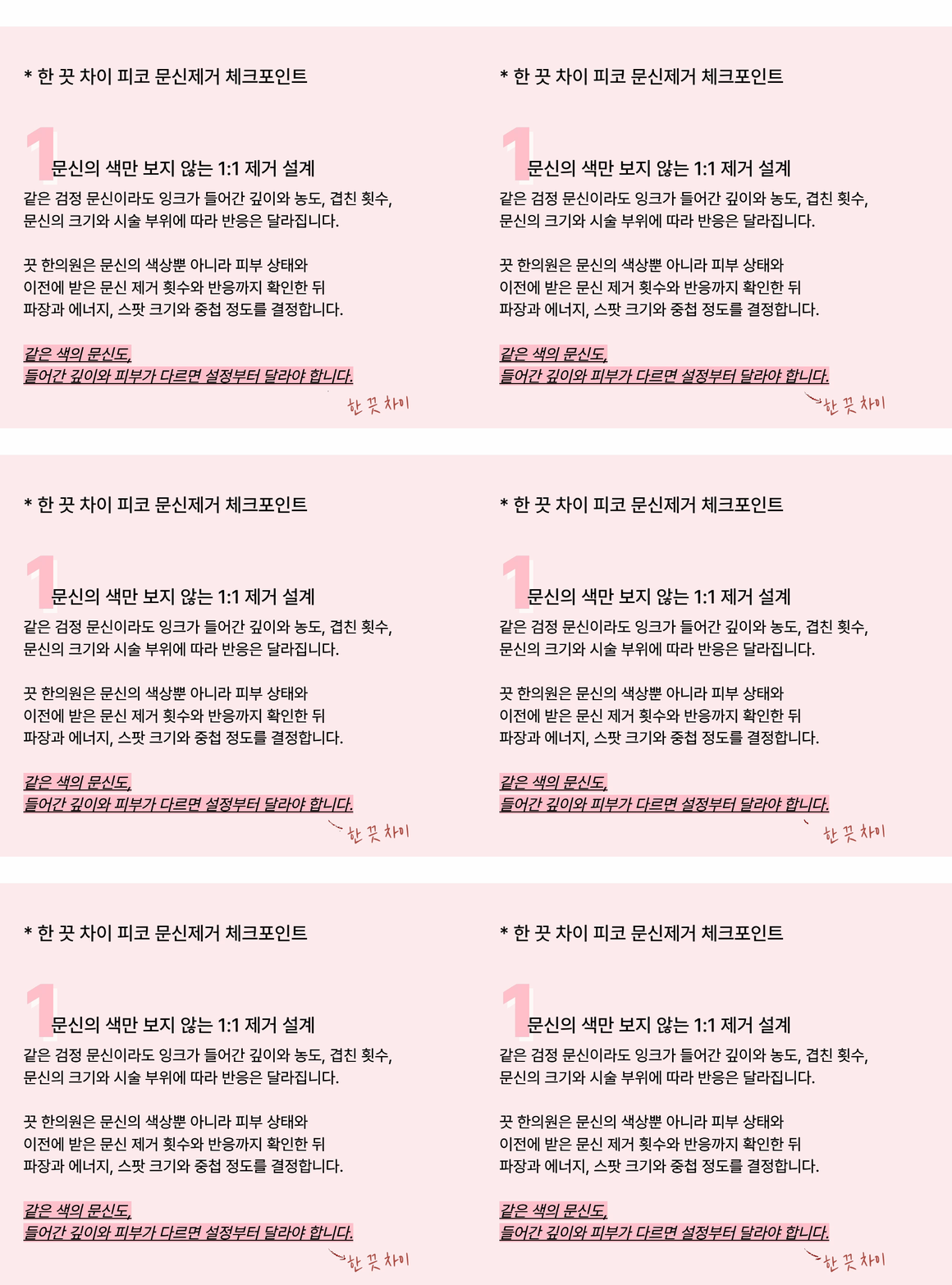
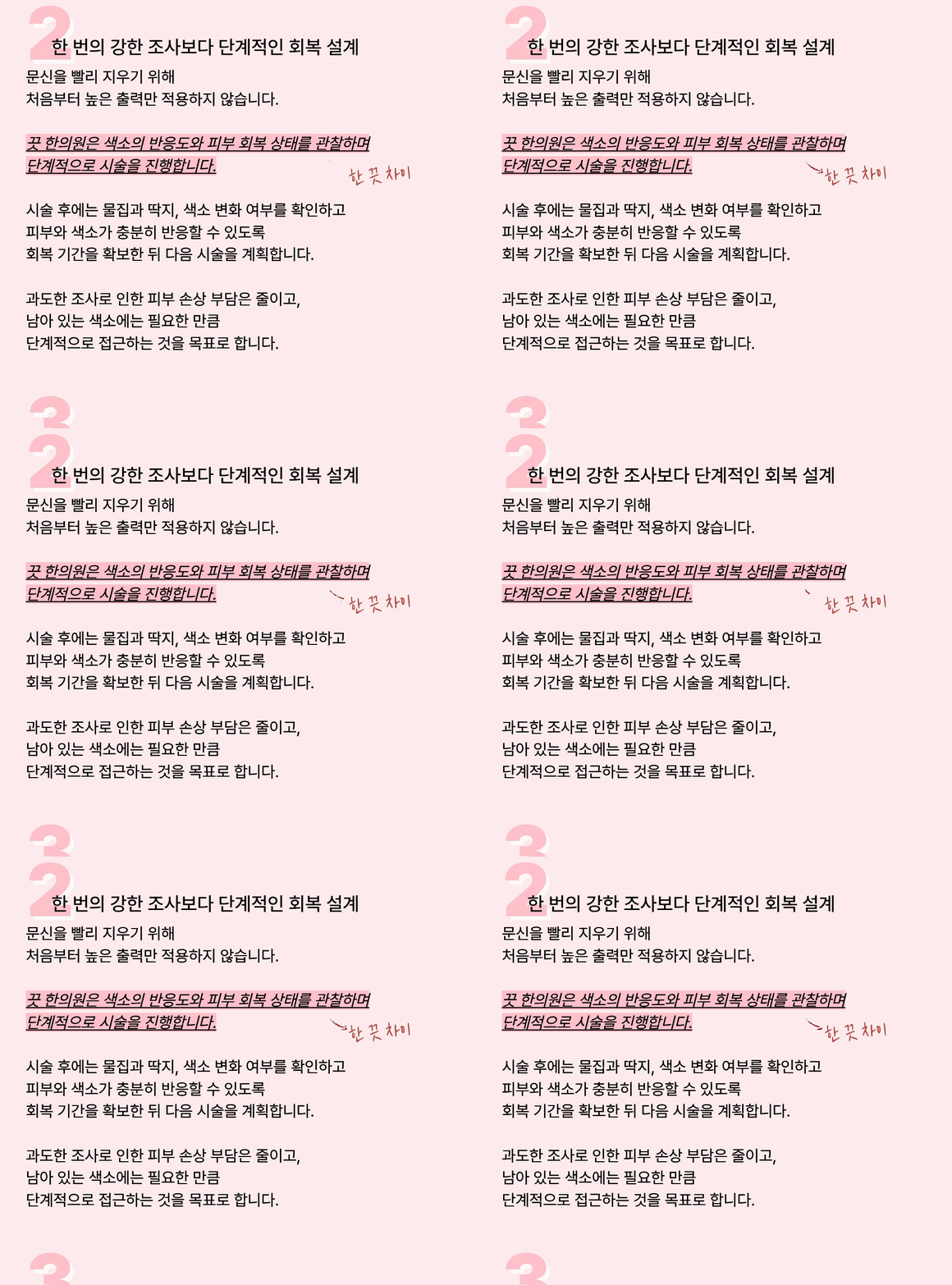
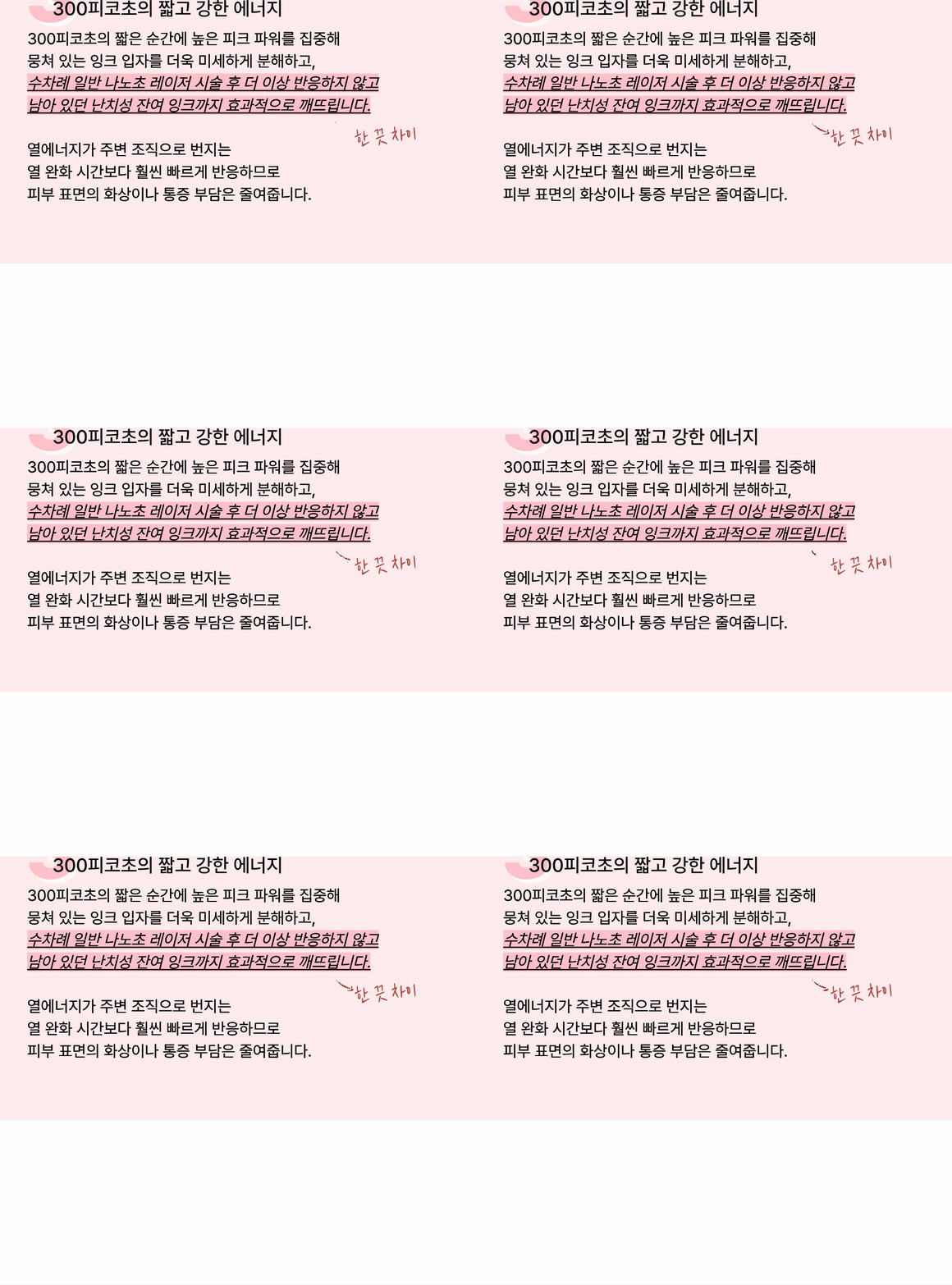
Step-by-step pigment destruction using Pico Plus 4 wavelengths
- 04
Soothing care and wound protection treatment
- 05
Provision of next treatment schedule and home care guide
시술 기본정보
시술 시간, 마취, 회복, 유지기간을 한 번에 확인하세요.
TIME
15-40 minutes depending on size and number
ANESTHESIA
Anesthetic cream
RECOVERY
Regenerative tape application for 1-2 weeks, gradual recovery
Ideal For
One Fine Difference makes real results.
- KKEUT POINT 01
Recommended for those who wish to remove tattoos they no longer want on their body.
- KKEUT POINT 02
It can also be considered if the tattoo's color has faded or blurred and its shape has changed over time.
Q&A
고객님들이 가장 많이 물어보시는 내용을 모았습니다.
When can I receive tattoo removal treatment after getting a new tattoo?

For newly tattooed areas, you can consider removal treatment after about 4-6 weeks, once the treated area has sufficiently healed.
How many sessions are typically needed to completely remove a tattoo?
The number of sessions varies greatly among individuals due to various factors such as tattoo color, depth, size, and the type of ink used. We will provide an accurate estimate after a direct consultation.
What is the interval between treatment sessions?
For effective tattoo removal, it is generally common to repeat treatments at intervals of 4 to 6 weeks.
How much pain is involved during the procedure?
Pico Plus selectively removes melanin pigments, resulting in less pain compared to existing lasers. However, topical anesthetic cream or local anesthesia can be used for a more comfortable procedure.
Can semi-permanent eyebrow tattoos also be removed?
Not only black eyebrow tattoo pigments, but also red pigments remaining after semi-permanent eyebrow procedures can be removed.
What should I do if blisters appear after removal?
Even with sufficient post-care, in rare cases, blisters larger than 2cm may occur, especially with tattoos containing a large amount of pigment. Such large blisters can lead to hyperpigmentation, so appropriate medical treatment by a healthcare professional is absolutely necessary. If this situation occurs, please visit us, and we will provide sterile examination and treatment.
How does Pico Laser remove tattoos?
Pico Laser works by delivering very short laser energy in picosecond units to the tattoo pigment, breaking down the pigment particles into smaller fragments. These fragmented pigments do not disappear immediately after the procedure but are gradually cleared over several weeks through our body's immune response. Therefore, tattoo removal is a procedure that involves both the process of breaking down pigments with a laser and the subsequent process of our body clearing the pigments.
How many sessions are usually needed for tattoo removal?
The number of sessions required for tattoo removal varies greatly from person to person. Not only the color and size of the tattoo, but also the pigment density, depth, ink type, whether it's a professional tattoo, and skin condition can affect the number of treatments needed. Generally, multiple repeated treatments are often required, and dark, deep professional tattoos may need more sessions. Therefore, rather than determining an exact number of sessions from the beginning, it's advisable to assess how much the pigment fades in each session and decide the treatment frequency accordingly.
What is the ideal interval between tattoo removal sessions?
For tattoo removal, it is important to allow sufficient time for the laser-fragmented pigments to be cleared and for the skin to fully recover. Generally, repeat treatments are performed at intervals of approximately 6 to 8 weeks. However, a longer recovery period may be necessary depending on the tattoo size, amount of pigment, energy used, and the skin's reaction after the procedure. Taking too short an interval does not make the tattoo disappear faster, so it is important to proceed with the next treatment after the skin has fully recovered.
Can red or colored tattoos also be removed?
Laser tattoo removal can be considered for colored tattoos, but the wavelength that reacts differs depending on the tattoo color. For red or orange pigments, a 532nm wavelength can be used. However, some colors like blue or green may have limited response with only 1064nm and 532nm, making them more difficult to remove than black tattoos or requiring lasers with different wavelengths. Therefore, for colored tattoos, it is important to first confirm the colors used and then consult about the feasibility of treatment and the expected process.
What kind of laser is used to remove black tattoos?
For black tattoos, a Pico Laser with a 1064nm wavelength is primarily used. Since black pigments absorb 1064nm laser energy well, it is one of the most commonly used combinations for tattoo removal.
Does the tattoo disappear immediately after tattoo removal?
Not all pigments disappear immediately after tattoo removal. Since the laser breaks down the pigments and our body needs to clear them, the tattoo gradually fades over several weeks after the procedure. Immediately after the procedure, the tattoo area may appear white, red, or swollen, and pigment changes are observed after these initial reactions subside.
Can tattoos be completely erased?
While significant pigment reduction can be expected for many tattoos, complete removal without a trace cannot be guaranteed for all tattoos. Depending on the type and depth of pigment, the ink used, and skin condition, some pigment may remain, and hyperpigmentation or hypopigmentation of the skin may occur during the treatment process. Especially multi-colored tattoos or tattoos that have been layered multiple times may take longer to treat. Therefore, it is more realistic to consult about the extent of pigment reduction possible for the current tattoo rather than about complete removal.
Can tattoo removal cause scarring?
Even with appropriate laser settings and consideration for skin recovery, all laser procedures carry the possibility of skin reactions. Temporary redness, hyperpigmentation, or hypopigmentation may occur after tattoo removal, and in rare cases, changes in skin texture or scars may remain. Particularly, excessive laser energy, repeated stimulation, or forcibly removing scabs and blisters formed after the procedure can increase the risk of skin damage. Therefore, for tattoo removal, it is important to proceed at appropriate intervals while monitoring skin reactions and to ensure good aftercare.
What is the difference between Pico Laser and general tattoo removal lasers?
For tattoo removal, Q-switched lasers in nanosecond units and Pico Lasers in picosecond units are used. Pico Laser is characterized by utilizing a photoacoustic effect, which delivers laser energy to the pigment in a shorter time than nanoseconds, thereby breaking down tattoo pigment particles into smaller fragments. Using short pulses has the advantage of targeting pigments while reducing the time for heat to spread to surrounding tissues. However, the results of tattoo removal are not solely determined by whether it's a Pico Laser; the wavelength suitable for the tattoo color, energy settings, and treatment intervals are also important.
Cautions
Results = Treatment × Aftercare. Please follow the notes below.
Depending on the individual's skin condition, symptoms such as pain, bleeding, swelling, bruising, scabbing, itching, or blistering may accompany the procedure.
For one week after the procedure, you must be especially careful not to let water touch the treated area, and when washing your face, only perform dry cleansing. Clean wound care is essential to prevent infection.
Keep the wound area moist by applying a regenerative tape or ointment for wet dressing.
If scabs or dead skin cells form on the treated area, do not forcibly remove them; wait for them to fall off naturally.
Refrain from alcohol, smoking, and strenuous exercise for one week, as they can hinder skin regeneration and cause inflammation.
For approximately one week after the procedure, refrain from activities that may burden the skin, such as drinking alcohol, smoking, saunas, or strenuous exercise.
To prevent infection and irritation, avoid saunas, jjimjilbangs (Korean bathhouses), and swimming pools for two weeks.
To prevent post-procedure hyperpigmentation, it is essential to apply sunscreen for at least three months.
To promote smooth skin regeneration, it is recommended to apply a regenerative cream and combine it with sufficient moisturizing care.
Since the eyebrows are a thin and sensitive area, swelling may persist for about 3-4 days after the procedure.
Hair in the treated area may temporarily bleach, but new hair that grows back afterward will return to its original color, so there is no need to worry.