


[Meticulous Doctor] Tattoo RemovalTattoo Removal - Permanent Eyebrow Tattoo Removal

Tattoo Removal - Permanent Eyebrow Tattoo Removal
We cleanly remove discolored or unsatisfactory eyebrow tattoos, tailored to your skin condition. We help clear existing traces to allow for a new eyebrow design. [VAT separate]
Options
Treatment Details
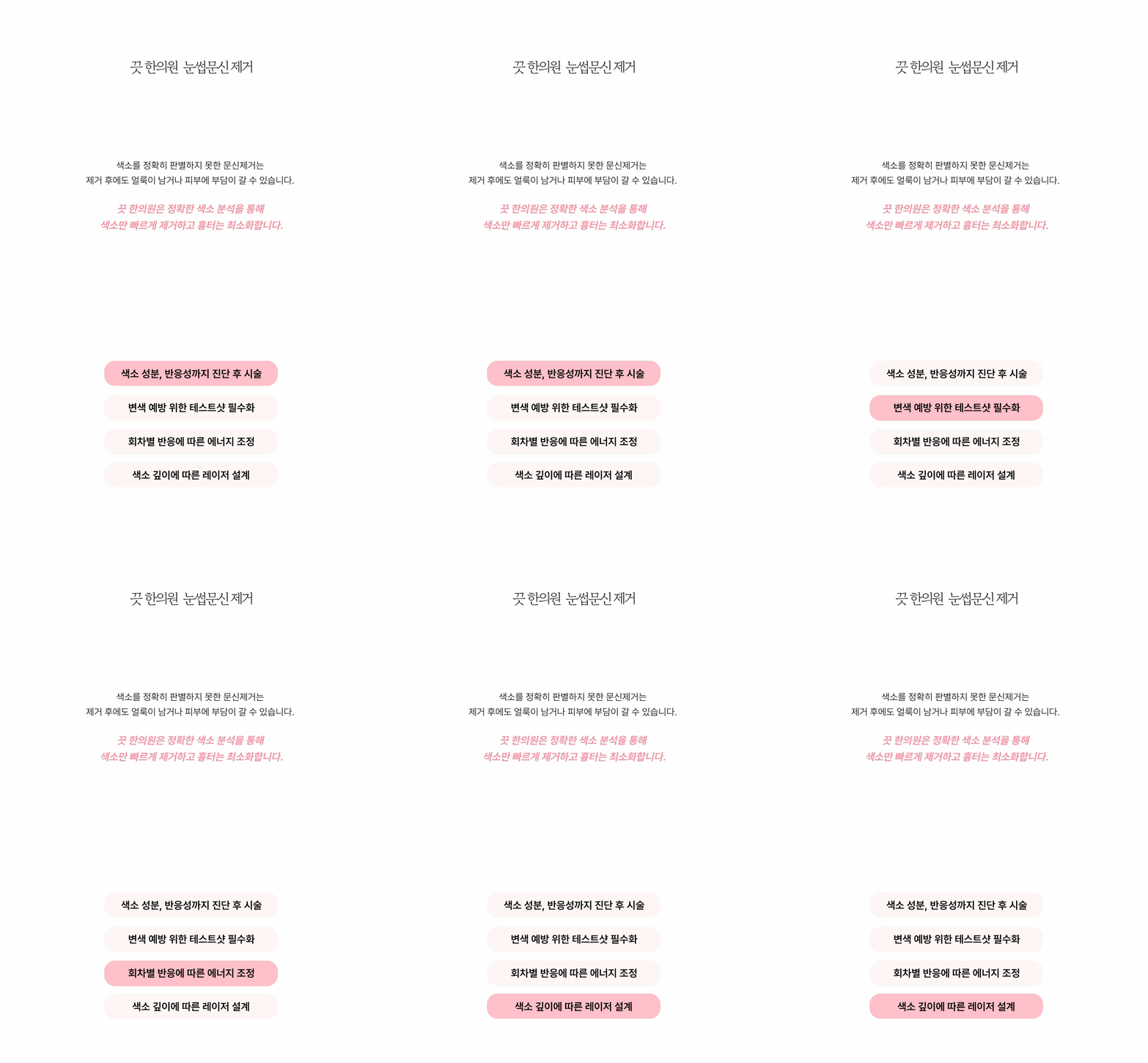
Key Features of Eyebrow Tattoo Removal Offered by Kkeut Korean Medicine Clinic
1. In-depth Analysis and Diagnosis by Pigment Type
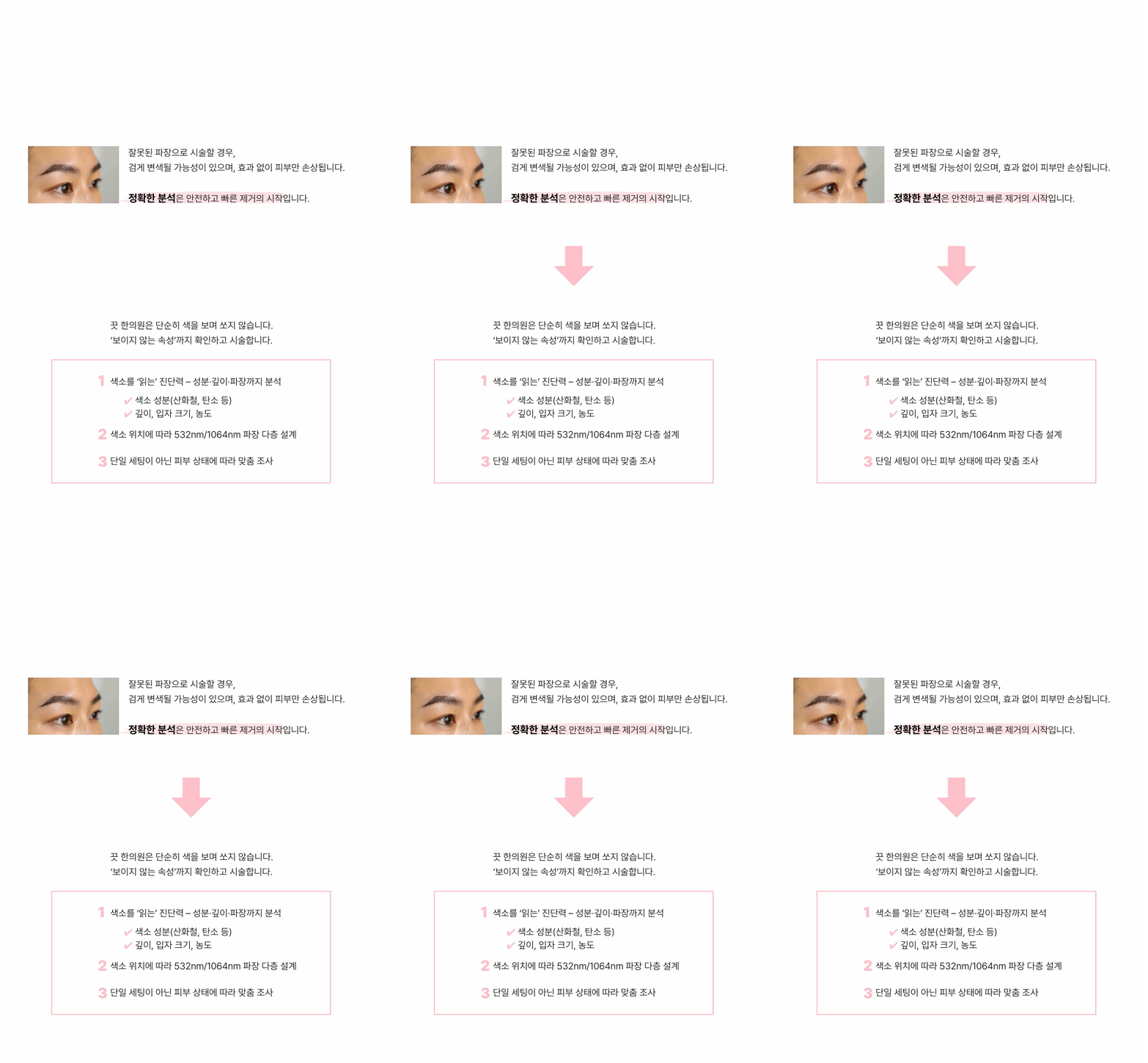
We do not perform procedures based solely on visible color; instead, we meticulously analyze the components of the tattoo pigment, its location within the skin, and its concentration.
2. Principle of Pre-Treatment Test Shots
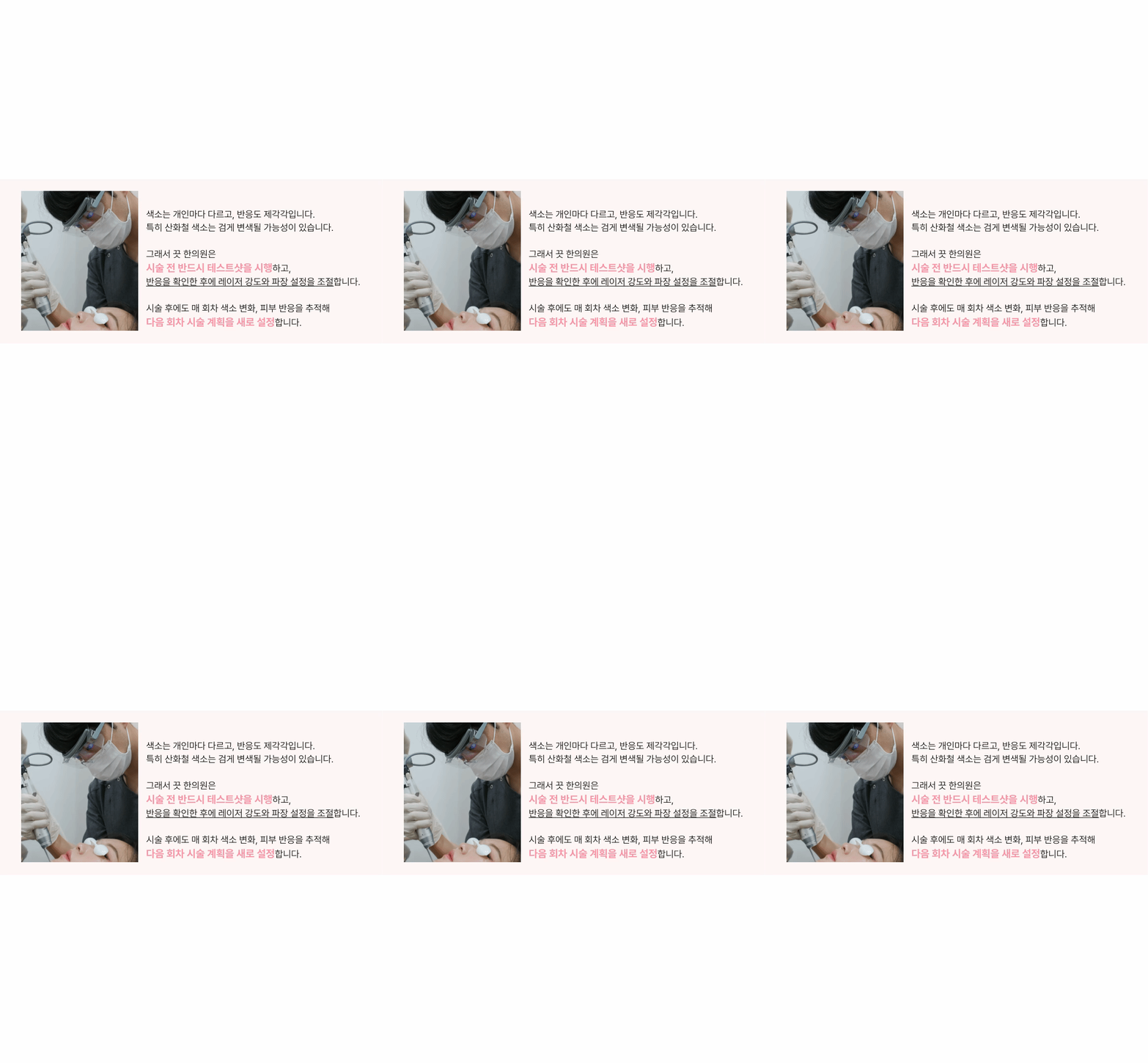
To prevent undesirable pigment discoloration, we carefully confirm the reaction of individual pigments with test shots before the main treatment.
3. Establishment of Step-by-Step Customized Treatment Plans
After each treatment, we carefully observe changes in the skin and pigment, subtly adjusting the direction of subsequent treatments.
4. Precise Irradiation Method Considering Pigment Depth
We apply different laser wavelengths according to the depth of pigment deposition within the skin, approaching with a multi-layered treatment plan.
Reasons to Consider Eyebrow Tattoo Removal at Kkeut Korean Medicine Clinic
1. Customized Diagnosis Through Pigment Component Analysis
Relying solely on the visible color to proceed with laser treatment can inadvertently lead to incomplete results.
At our clinic, before treatment, we identify the specific components of the pigment (such as iron oxide, carbon, mixed inks, etc.) and conduct a comprehensive diagnosis that considers the reactivity of each pigment to laser wavelengths, its depth within the skin, and its density.
The appropriate laser wavelength and energy can vary depending on the actual pigment distribution layer and particle size within the skin. In this regard, we believe analysis through skilled clinical experience is crucial.
2. Implementation of Pre-Treatment Test Shots to Minimize Pigment Discoloration
Particularly, iron oxide-based pigments can sometimes exhibit a reverse reaction, turning black when exposed to laser irradiation.
Therefore, at Kkeut Korean Medicine Clinic, we pre-confirm the pigment's reaction pattern through a test shot process before every treatment, adjusting the appropriate laser energy and wavelength accordingly.
If the possibility of discoloration is observed, we gradually adjust the laser intensity and proceed with caution.
3. Observation of Progress at Each Treatment Stage and Establishment of Individualized Plans
Eyebrow tattoo removal is not a treatment that simply repeats a fixed number of sessions.
After meticulously checking the degree of pigment removal and skin reaction at each treatment session, the direction for the next treatment is re-established.
For example, if pigment discoloration occurs after the first treatment, a different wavelength may need to be applied subsequently. Furthermore, the treatment interval also needs adjustment based on the skin's recovery status and the rate of pigment expulsion.
4. Sophisticated Multi-Layered Treatment Designed According to Pigment Depth
Eyebrow tattoo pigments are typically located in the upper dermis, but their depth and distribution can vary among patients. At our clinic, we precisely adjust the laser irradiation depth, creating a multi-layered treatment plan that applies a 532nm wavelength for pigments closer to the epidermis and a 1064nm wavelength for pigments deeper in the dermal layer.
Thus, instead of performing the treatment with just one setting, we identify the exact location of the pigment and provide individualized custom irradiation.
Basic Principles of Eyebrow Tattoo Removal Treatment
Eyebrow tattoo removal is performed utilizing the principle known as 'selective photothermolysis'.
What is selective photothermolysis?
This principle is based on light energy being selectively absorbed only by specific tattoo pigment particles.
The absorbed energy converts into heat, causing the pigment particles to expand at high temperatures and break down into minute fragments.
This process is designed so that surrounding normal tissues are not damaged and can be protected.
The laser wavelength used in the treatment is selected to match the type and characteristics of the pigment.
The 1064nm wavelength can reach deep into the dermal layer of the skin, making it advantageous primarily for removing black or brown pigments.
On the other hand, the 532nm wavelength primarily acts on the epidermal layer, and can be expected to be effective for removing lighter shades of pigment, such as red and orange.
However, it's not just the wavelength that is important. The pulse duration of the laser also plays a crucial role.
For eyebrow tattoo removal, extremely short pulse durations, typically in the nanosecond range or less, are primarily used. This is to deliver powerful energy concentrated only on the pigment particles within a brief moment.
By concentrating energy within a short duration, the spread of heat to surrounding skin tissues can be minimized. As a result, only the pigment particles receive localized high pressure and temperature, breaking down into minute fragments or vaporizing.
These finely fragmented pigment particles are absorbed by the body's macrophages and then slowly expelled from the body through the lymphatic system.
This expulsion process begins with an initial lymphatic reaction approximately 3 days to 2 weeks after the treatment. During this time, pigment particles travel to the lymph nodes and undergo processing in organs such as the liver, spleen, and lymph nodes.
Subsequently, over several weeks to months, our body's immune system and lymphatic circulation continue to work, gradually reducing the remaining pigments.
Tattoo removal is not simply about burning pigments in the skin. It's a principle where lasers are used to finely break down pigment particles, helping the body's immune system naturally absorb and expel them.
Short laser pulses contribute to breaking down tattoo pigment particles more finely and uniformly. These smaller pigment fragments can then be more easily absorbed and expelled by the body's immune system. This plays a crucial role in increasing the efficiency of the procedure while reducing its burden.
Eyebrow Tattoo Removal Procedure Steps
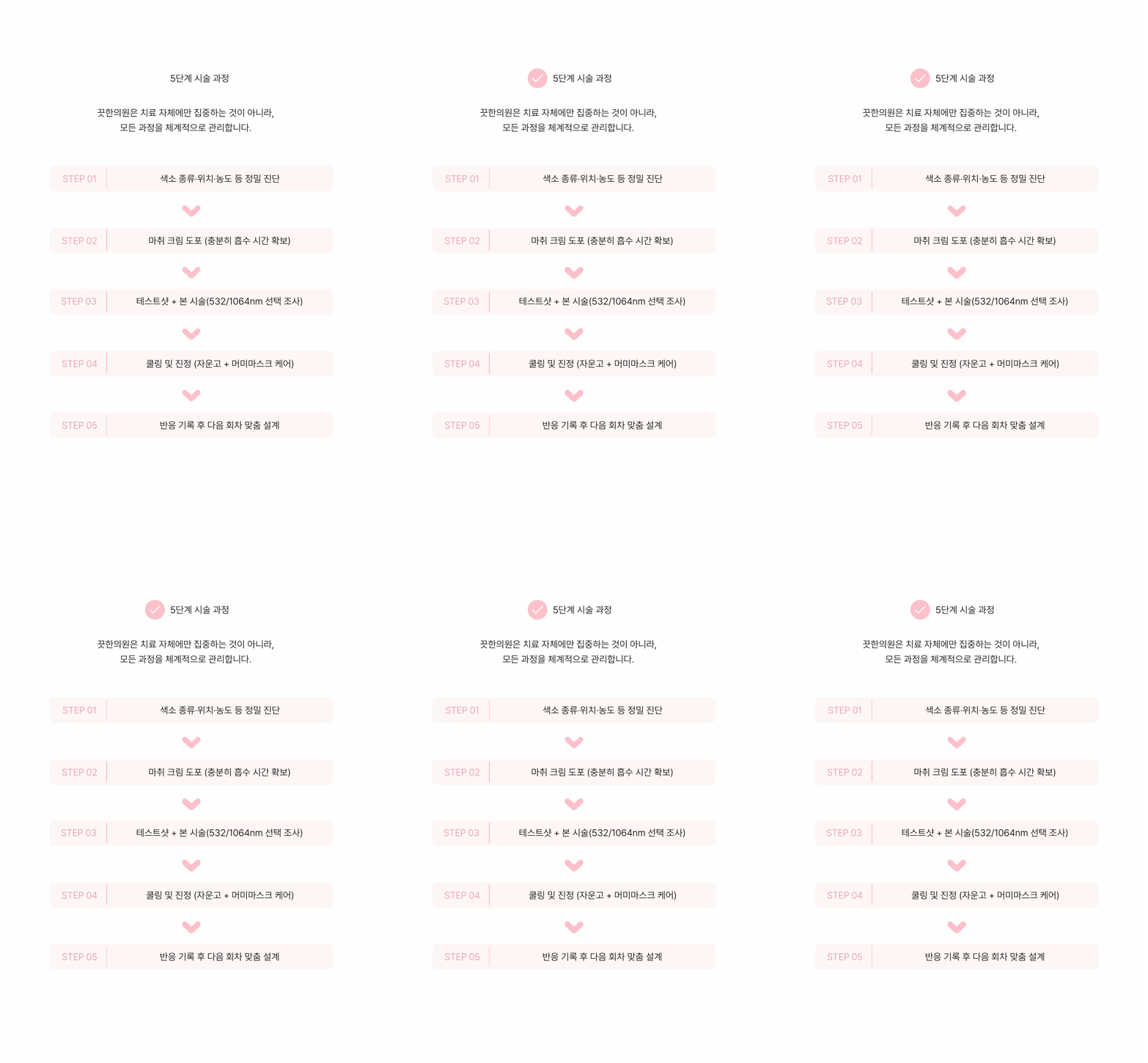
STEP 1. Individual Pigment Diagnosis
We meticulously identify the type, depth, concentration, and potential for oxidation reactions of the tattoo pigment.
STEP 2. Anesthetic Cream Application
A generous amount of topical anesthetic cream is applied to the treatment area to help reduce discomfort.
STEP 3. Laser Treatment After Test Shot
We first perform a test shot to check skin reactions. Afterward, we determine the appropriate wavelength (1064nm/532nm) for the pigment and proceed with the treatment, adjusting laser intensity based on changes during the procedure.
STEP 4. Soothing and Cooling Care
To alleviate any white reaction or redness that may occur after the procedure, we provide soothing care using regenerative ointment or Jaungo (saffron ointment).
STEP 5. Reaction Recording and Next Treatment Plan
We observe the skin's reaction after the procedure, record its progress, and based on this, determine the direction for the next treatment.
Discomfort During Eyebrow Tattoo Removal and Post-Treatment Care
- After anesthesia, most patients generally experience a tolerable level of tingling or stinging.
- The white reaction or temporary redness that may appear immediately after the procedure usually subsides within a few hours.
- Occasionally, small scabs or redness may occur, but these usually improve within 2-3 days.
Treatment Interval
- Generally, we recommend treatments at intervals of 4 to 6 weeks. This allows the skin to recover and gives sufficient time for the pigment to be expelled.
- Depending on the tattoo's pigment density or individual skin characteristics, 3 to 5 or more treatments may be necessary.
- If the treatment interval is too short, it can stress the skin or potentially alter the pigment, so caution is advised. Allowing sufficient time for pigment metabolism can help improve treatment effectiveness.
When to Consider Treatment
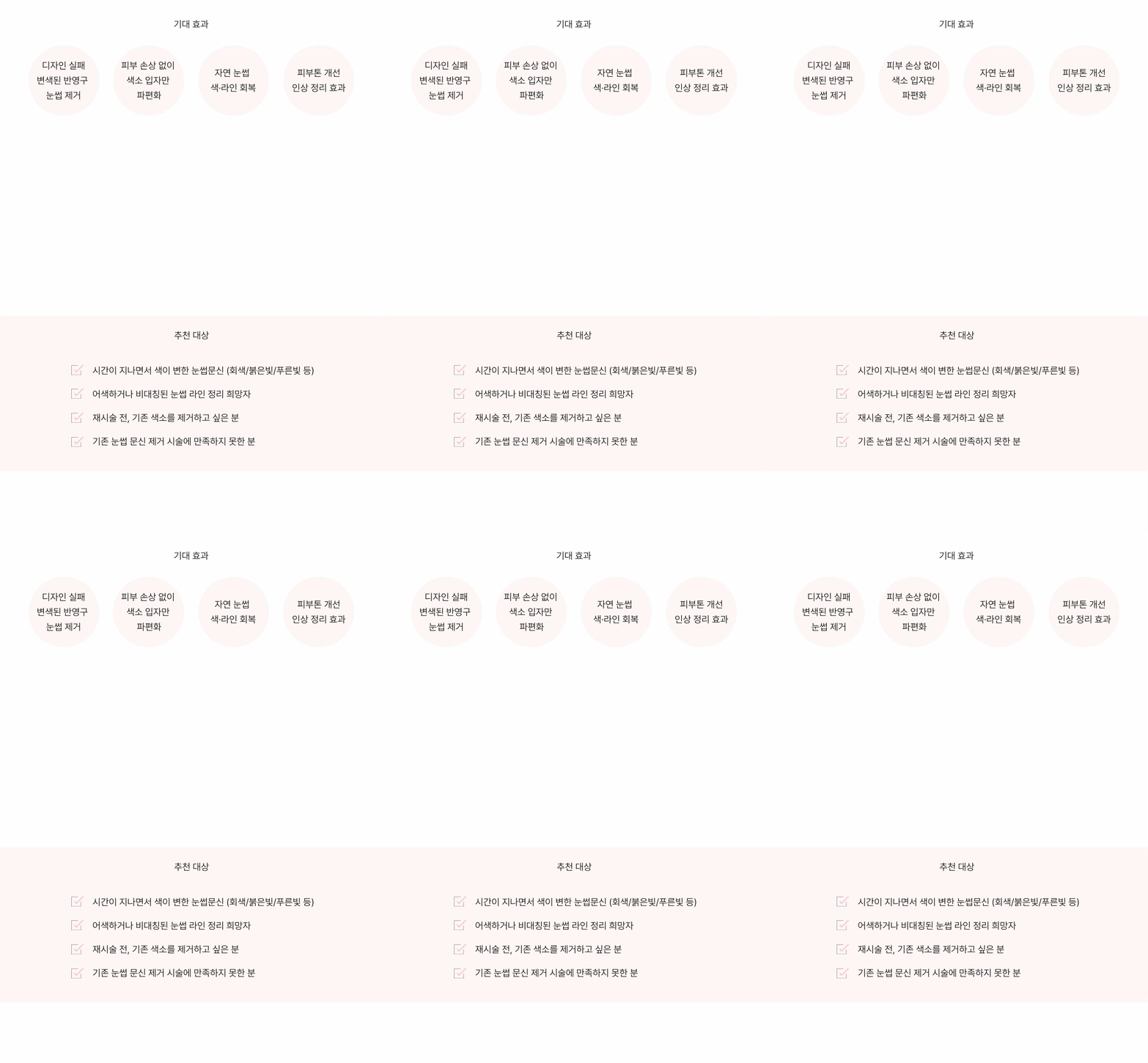
- Individuals with faded or discolored semi-permanent eyebrow tattoos (e.g., gray, reddish, bluish) over time.
- Those who find their eyebrow design unnatural or desire correction or removal due to asymmetry.
- Individuals who need to clear existing tattoo pigment for a new eyebrow procedure.
- Those who wish to return to a more natural appearance.
- Those who are dissatisfied with the results of a previous procedure elsewhere.
Director's Insights
Eyebrow tattoo removal is not a procedure achieved by simply applying a laser.
All details, including the pigment's location, depth, particle size, composition, and potential for future discoloration, must form the basis of an accurate diagnosis.
Especially for pigments like iron oxide-based ones, which exhibit unpredictable reactions, meticulous diagnosis through extensive clinical experience and precise laser setting adjustments are crucial, going beyond mere laser application.
It is advisable to choose a clinic that analyzes pigment components beforehand and performs sufficient reactivity tests to tailor the treatment to each individual, rather than simply operating a device with predetermined settings.
Tattoo removal is not solely determined by the equipment; it is a process significantly influenced by the operator's skill and judgment.
Stable and predictable results can only be achieved when supported by the operator's clinical experience and meticulous judgment.
As the director, we always meticulously examine the eyebrow condition of each patient who visits our clinic.
Believing that thorough analysis leads to satisfactory results, we personally oversee and coordinate every step, from the diagnosis process to post-treatment recovery.
We will always dedicate our utmost effort to enhance the treatment's effectiveness.
Post-Treatment Precautions
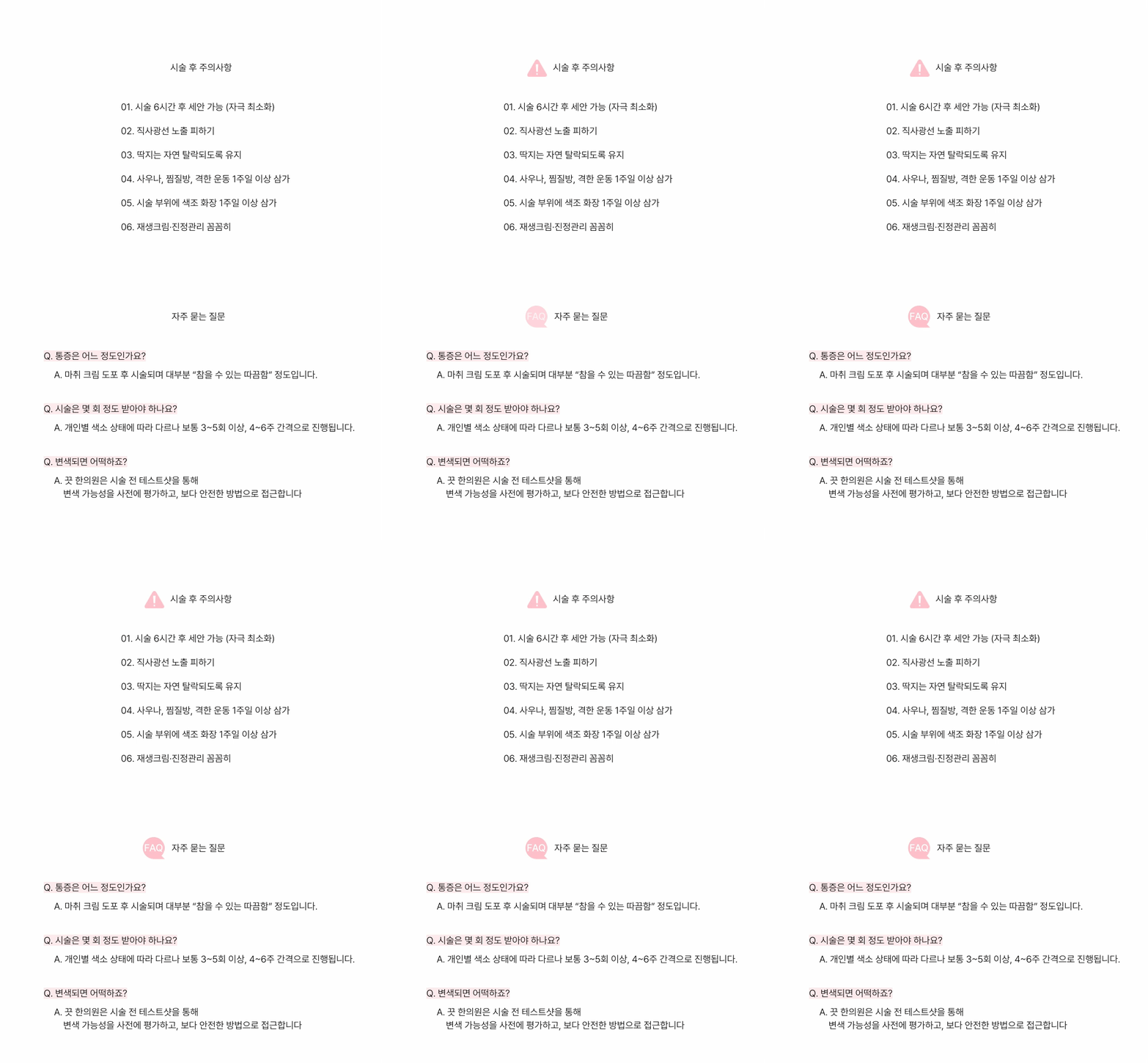
- It is advisable to avoid washing the treated area for at least 6 hours after the procedure to prevent irritation.
- Minimize exposure to UV light. When going out, applying sunscreen and covering up with a hat or sunglasses can be helpful.
- Do not forcibly remove scabs that form after the procedure; it is best to let them fall off naturally.
- Please apply a regenerating cream consistently to help with skin recovery.
- For about a week after the procedure, please refrain from high-temperature environments such as saunas or jjimjilbangs, and vigorous exercise.
- It is recommended to refrain from using cosmetics on the eyebrow area (e.g., pencils, tattoo pens) for at least 1 week after the procedure.
Eyebrow Tattoo Removal Procedure
첫 상담부터 마무리까지의 실제 진행 순서를 확인하세요.
- 01
Individualized Consultation
- 02
Anesthetic Cream Application
- 03
Laser Setting and Procedure According to Individual Skin Condition
- 04
Soothing Care (using a mummy mask)
시술 기본정보
시술 시간, 마취, 회복, 유지기간을 한 번에 확인하세요.
TIME
Within 30 minutes
ANESTHESIA
Anesthetic cream for 15-30 minutes
RECOVERY
Immediate return to daily life
Ideal For
One Fine Difference makes real results.
- KKEUT POINT 01
Those who are concerned about semi-permanent eyebrow tattoos that have changed color over time (e.g., discolored to gray, red, blue, etc.).
- KKEUT POINT 02
Those who are considering removal because their current eyebrow design looks awkward or is asymmetrical.
Q&A
고객님들이 가장 많이 물어보시는 내용을 모았습니다.
After getting an eyebrow tattoo, how soon can I receive removal treatment?

After getting a semi-permanent tattoo, it is recommended to consider removal treatment after at least 4 to 6 weeks.
How many sessions are needed to completely remove a tattoo?
There may be individual differences depending on the depth and darkness of the tattoo pigment. Generally, we recommend multiple sessions at intervals of 4 to 6 weeks.
Do I need to prepare a separate ointment to use after the treatment?
After tattoo removal treatment, your skin may be somewhat irritated, so we provide the necessary ointment at our clinic.
Cautions
Results = Treatment × Aftercare. Please follow the notes below.
To reduce skin irritation in the treated area, please avoid using scrub products for about 1 week after the procedure.
If scabs form on the treated area, it is best not to forcibly remove them; allow them to fall off naturally.
After the procedure, care must be taken to prevent water from directly touching the treated area for at least 24 hours.
After the procedure, please be careful not to rub or unnecessarily irritate the treated area.
During the recovery period, it is advisable to refrain from alcohol, smoking, visiting saunas, and strenuous exercise for about 1 week.